Cell & Tissues questions

Q.1

19 Dec 2025 Shift 1
Which of the following statements about lysosomes is correct?
Show answer without attempting

Answer: C — Lysosomes contain digestive enzymes.

Lysosomes are membrane-bound organelles containing hydrolytic (digestive) enzymes capable of breaking down all kinds of biomolecules, including proteins, carbohydrates, lipids, and nucleic acids. Due to this function, they are often referred to as the 'suicide bags' of the cell.
Open question page

Q.2

17 Dec 2025 Shift 1
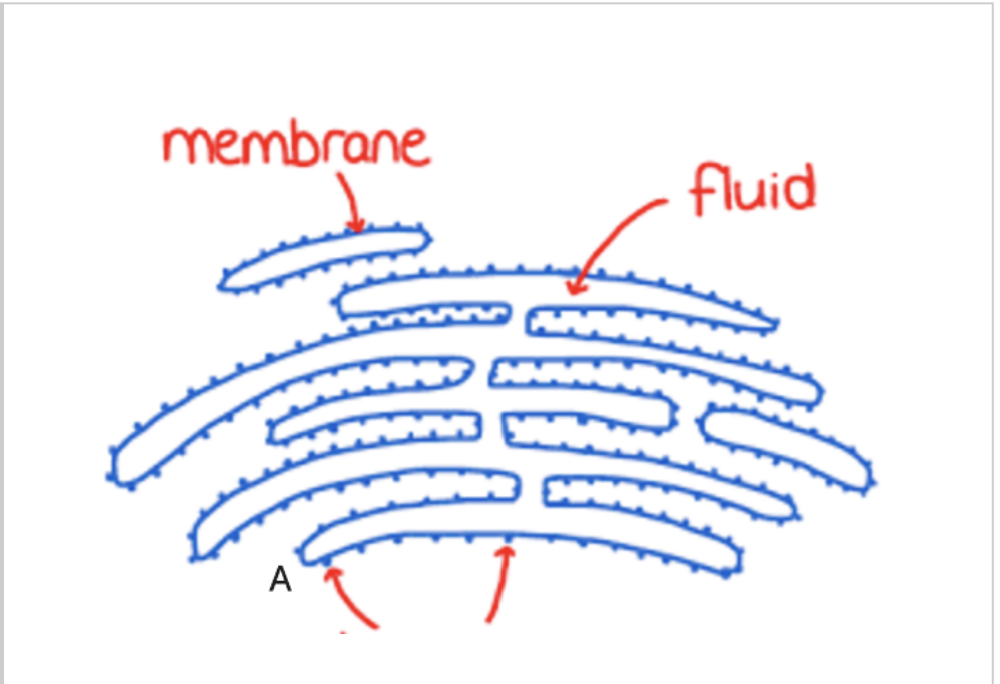
What is the primary function of the structure 'A' attached to the rough endoplasmic reticulum in the given diagram?
Question figure
Show answer without attempting

Answer: B — Manufacturing proteins

The rough endoplasmic reticulum is studded with ribosomes on its outer surface, which are the primary sites for protein synthesis in the cell.

Open question page

Q.3

17 Dec 2025 Shift 1
The dense structure inside the nucleus that produces ribosomes is called the _____.
Show answer without attempting

Answer: C — nucleolus

The nucleolus is a dense, non-membrane-bound structure inside the nucleus responsible for the transcription and assembly of ribosomal RNA (rRNA) to form ribosomes.

Open question page

Q.4

17 Dec 2025 Shift 1
Which of the following are the covering or protective tissues in the animal body?
Show answer without attempting

Answer: D — Epithelial tissues

Epithelial tissues form the outer protective coverings and inner linings of organs and cavities throughout the animal body, providing a barrier against mechanical injury, pathogens, and fluid loss.

Open question page

Q.5

14 Dec 2025 Shift 1
Which cell organelle is responsible for packaging and dispatching materials within or outside the cell?
Show answer without attempting

Answer: B — Golgi apparatus

The Golgi apparatus is the cell organelle responsible for modifying, sorting, packaging, and dispatching synthesized materials (like proteins and lipids) to various targets inside or outside the cell.

Open question page

Q.6

14 Dec 2025 Shift 1
Which of the following correctly compares the cell wall and cell membrane in plant and animal cells?
Show answer without attempting

Answer: B — Plant cells have both a rigid cell wall and a cell membrane, while animal cells only have a flexible cell membrane.

Plant cells possess an outer rigid cell wall made of cellulose in addition to a flexible cell membrane, providing structural support and protection. Animal cells lack a cell wall and only possess a flexible cell membrane.

Open question page

Q.7

14 Dec 2025 Shift 2
Which of the following cell organelles do NOT have their own DNA?
Show answer without attempting

Answer: A — Lysosomes

Lysosomes are digestive single-membrane vesicles that do not contain their own DNA. Mitochondria, chloroplasts (plastids), and the nucleus all possess their own genetic material (DNA).

Open question page

Q.8

14 Dec 2025 Shift 2
Xylem is a complex permanent tissue. Which of the following is correct regarding its composition?
Show answer without attempting

Answer: B — Tracheids, xylem parenchyma and xylem fibres

Xylem is a complex permanent tissue in plants responsible for the transport of water and minerals. Its primary components are tracheids, vessels, xylem parenchyma, and xylem fibres.

Open question page

Q.9

12 Dec 2025 Shift 1
Which of the following statements about vacuoles is INCORRECT?
Show answer without attempting

Answer: D — Vacuoles are responsible for protein synthesis in the cell.

Vacuoles are storage sacs for solid or liquid contents. In plant cells, vacuoles are large, membrane-bound organelles filled with cell sap, which provides turgidity and rigidity to the cell, and stores substances like amino acids, sugars, and proteins. However, protein synthesis is the function of ribosomes, not vacuoles.

Open question page

Q.10

12 Dec 2025 Shift 1
Which of the following statements is correct regarding the mitochondria in a plant cell?
Show answer without attempting

Answer: D — The mitochondrial inner membrane is deeply folded.

Mitochondria are known as the powerhouse of the cell. Key features of plant and animal mitochondria include having their own DNA and ribosomes, a double-membrane structure, and a deeply folded inner membrane called cristae, which increases the surface area for ATP-generating biochemical reactions.

Open question page

Q.11

12 Dec 2025 Shift 1
Which of the following tissues makes the plant hard and stiff?
Show answer without attempting

Answer: A — Sclerenchyma

Sclerenchyma is a type of permanent plant tissue containing dead cells with thick, lignified cell walls that provide mechanical strength, rigidity, and hardness to plant parts like nutshells, husks, and stems.

Open question page

Q.12

12 Dec 2025 Shift 2
What is the meaning of ‘Different parts of the human body perform different functions’?
Show answer without attempting

Answer: A — Presence of division of labour

In multicellular organisms, different body parts or organs perform specialized functions. This division of labor allows efficient functioning of the organism as a whole.

Open question page

Q.13

12 Dec 2025 Shift 2
Which of the following statements is INCORRECT regarding the shape and function of different cell types?
Show answer without attempting

Answer: D — Muscle cells are flat and circular to help them flow in blood.

Muscle cells are elongated and contractile (muscle fibres) to facilitate movement, not flat and circular like red blood cells which are designed to flow easily in blood.

Open question page

Q.14

12 Dec 2025 Shift 2
Which of the following cell organelles is filled with digestive enzymes and helps to keep the cell clean by digesting any foreign material as well as worn out cell organelles?
Show answer without attempting

Answer: B — Lysosomes

Lysosomes are membrane-bound organelles containing powerful digestive enzymes. They serve as the waste disposal system of the cell by digesting foreign materials and damaged cell organelles, earning them the name 'suicide bags'.

Open question page

Q.15

12 Dec 2025 Shift 3
Which type of epithelial tissue is found lining the kidney tubules?
Show answer without attempting

Answer: C — Cuboidal Epithelium

Cuboidal epithelium lines the kidney tubules and ducts of salivary glands, where it provides mechanical support and helps in secretion and absorption. Columnar epithelium is found in the lining of the stomach and intestines.

Open question page

Q.16

12 Dec 2025 Shift 3
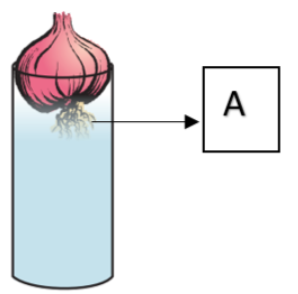
Study the experimental set up containing a water filled jar and an onion with growing roots set vertically up. Which type of tissue is present in the portion A of roots tips?
Question figure
Show answer without attempting

Answer: B — Meristematic tissue

The tip of the root (region A) contains actively dividing cells responsible for the growth in length of the plant. This tissue is known as meristematic tissue.

Open question page

Q.17

12 Dec 2025 Shift 3
Match the following animal tissues with their correct features. a. Squamous Epithelium i. Cells are thin and flat and form a delicate lining of the oesophagus b. Stratified Squamous Epithelium ii. It forms the inner lining of the respiratory tract c. Cuboidal Epithelium iii. It forms the lining of kidney tubules and ducts of salivary glands d. Ciliated Columnar Epithelium iv. Cells are arranged in many layers, as in skin
Show answer without attempting

Answer: C — a i, b iv, c iii, d ii

Squamous epithelium consists of thin, flat cells forming a delicate lining (e.g., oesophagus). Stratified squamous epithelium cells are arranged in layers (e.g., skin). Cuboidal epithelium lines kidney tubules. Ciliated columnar epithelium forms the inner lining of respiratory tracts.

Open question page

Q.18

11 Dec 2025 Shift 1
What type of epithelial tissue is the outer skin made of?
Show answer without attempting

Answer: B — Stratified squamous epithelium

The outer layer of human skin is made of stratified squamous epithelium, which provides protection against wear and tear and mechanical injury.

Open question page

Q.19

11 Dec 2025 Shift 1
Which of the following statements is NOT true regarding the nucleus?
Show answer without attempting

Answer: B — Nuclear membrane is a poreless and rigid structure.

The nuclear membrane contains nuclear pores that regulate the transport of molecules between the nucleus and the cytoplasm, meaning it is not poreless or rigid.

Open question page

Q.20

11 Dec 2025 Shift 2
Match the following connective tissues with their correct features. a. Areolar tissue i. fills spaces between organs b. Skeletal tissues ii. provide structural support and reduce friction c. Ligaments iii. fibrous tissues that maintain muscle-to-bone connection d. Tendons iv. fibrous tissues that maintain bone-to-bone connection
Show answer without attempting

Answer: C — a-i, b-ii, c-iv, d-iii

Areolar tissue fills spaces inside organs and supports internal organs. Skeletal tissues (like bone and cartilage) provide structural support and reduce friction at joints. Ligaments connect bone to bone (iv). Tendons connect muscle to bone (iii). Thus, matching gives a-i, b-ii, c-iv, d-iii.

Open question page

Related topics in Biology

0/200 correct0 marks